Posts
New talk: Networks of …
How can digital-humanities-driven “big data” history be made more useful for collaborative historical research? Drawing on a research program on the history of the Max Planck Society, this talk looks at the structure and dynamics of knowledge networks, the challenges of big data history …
New workshop: How to …
When in the research lifecycle do small interventions yield the largest gains in code, workflow, and research quality? This hands-on workshop combines two initiatives working on that question from different angles — CODECHECK, which independently checks computational workflows as part of peer …
New chapter: From Source …
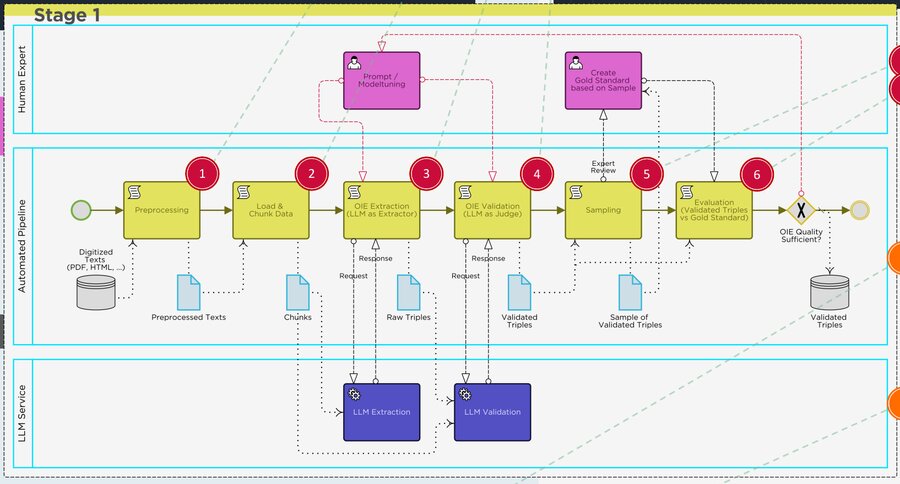
Extracting structured knowledge graphs from unstructured historical texts is precise but slow when done by hand, and hard to automate without losing the nuances of historical sources. This chapter presents a two-stage computational pipeline — open information extraction followed by LLM-based …
New chapter: Large …
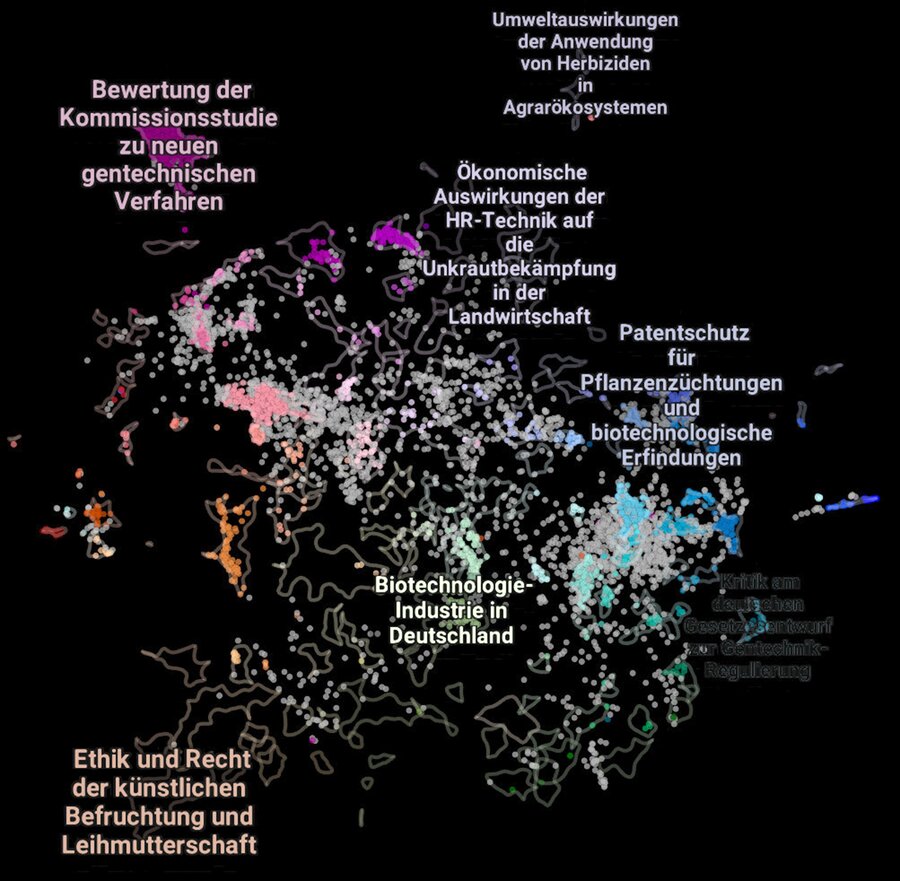
Bringing large language models into a shared research workflow raises different questions for historians, political scientists, and digital humanists working together. Drawing on the project “Analysis of narratives in the genetic engineering discourse,” this chapter reflects on extending …
New workshop: Publishing …
Version control gives researchers a complete history of every change to their code, letting them experiment freely without fear of losing a working version. This beginner-friendly, one-hour virtual workshop demystifies Git and GitHub for researchers who haven’t used them before: a brief …
New paper: Temporalities …
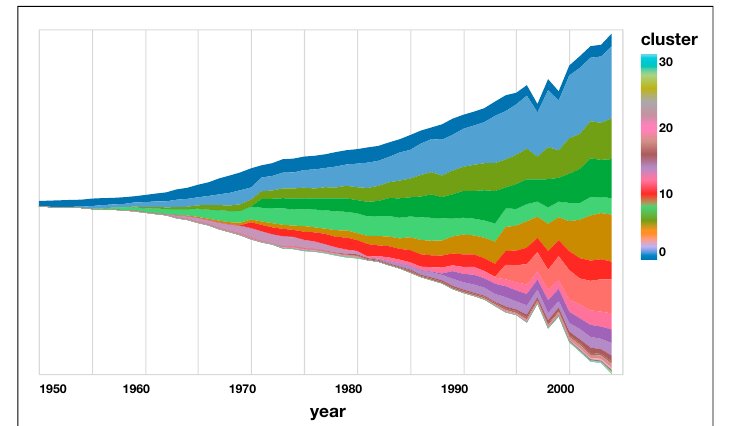
Scientific fields do not change at a single, uniform pace — some parts move quickly, others remain stable for decades. This paper applies the socio-epistemic networks framework, using time-dependent clustering of co-citation networks, to analyze the development of 20th-century scientific fields and …