Posts
New paper: Growing and …
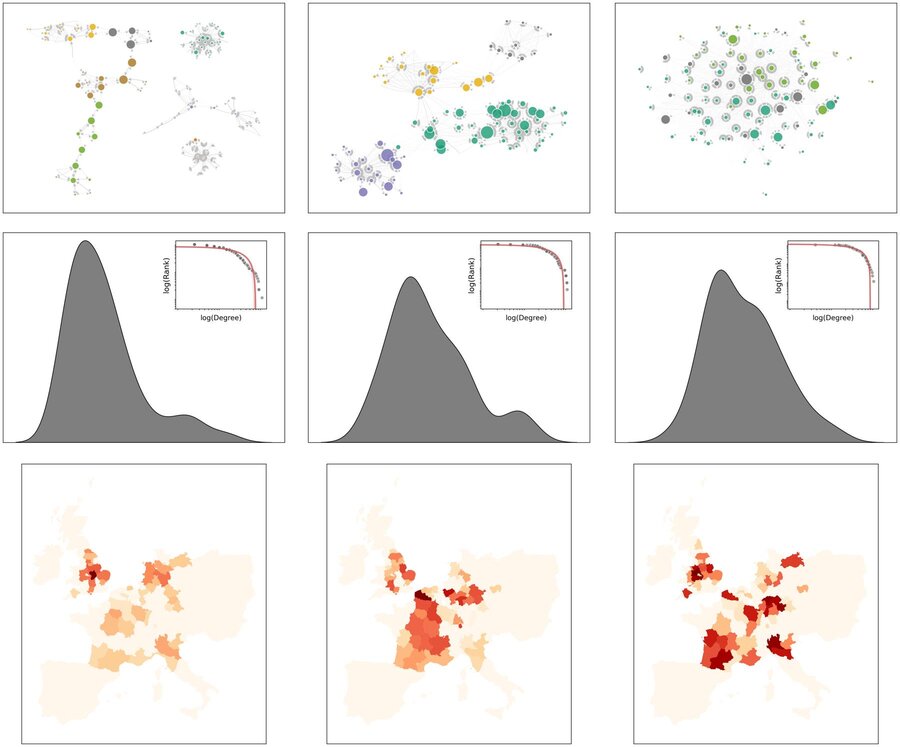
Digital archives are never complete, and that selection bias can quietly distort empirical studies built on them. This paper introduces an agent-based model that simulates both the sending of historical letters and their subsequent loss to archiving, allowing counterfactual correspondence networks …
New paper: Past, Present, …
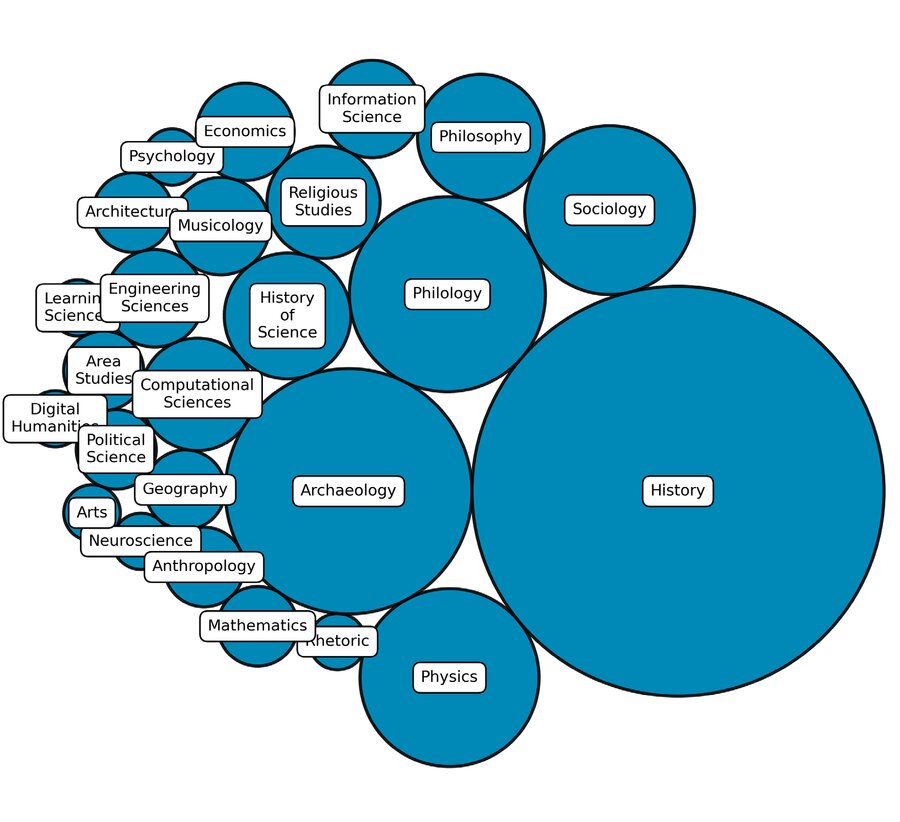
Historical network research (HNR) has always crossed disciplinary boundaries, but discussions of it tend to focus on epistemology rather than day-to-day practice. Based on an exploratory community survey, this paper looks at how scholars actually build, visualize, and analyze historical networks — …
New lesson: Simulating …
This Programming Historian lesson introduces agent-based modeling as a method for historical research, using the Python package mesa. Learners build a simulation of early modern letter-exchange networks — the Republic of Letters — starting from the basic concepts (what a simulation is; agents, …
New chapter: Why Would We …
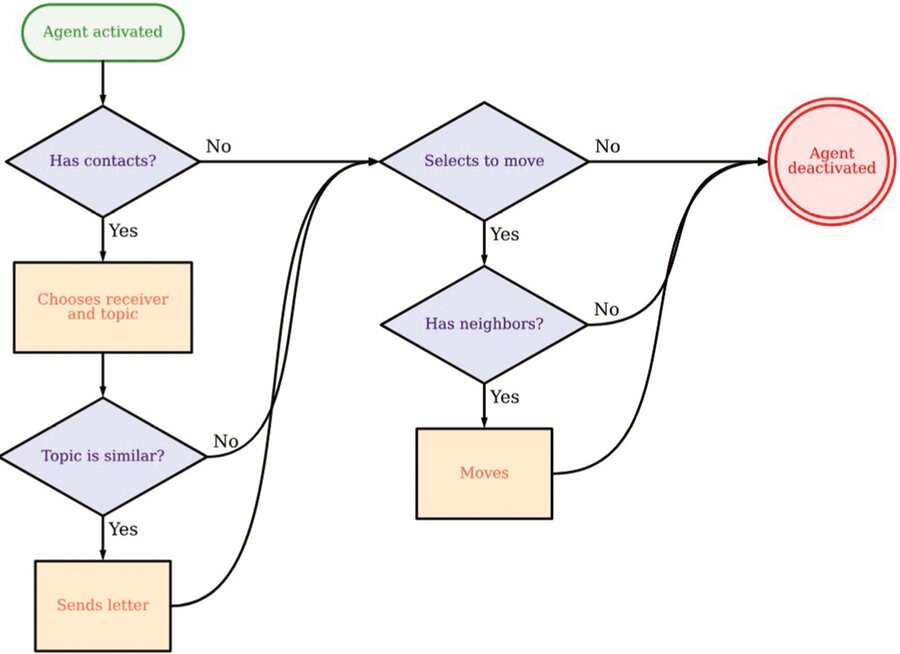
Working with archival material always raises the question of what circumstances produced a given document or collection — and what is missing from it. This chapter makes the case for agent-based modeling and simulation as ways to uncover possible biases and structurally represent historical …
New preprint: …
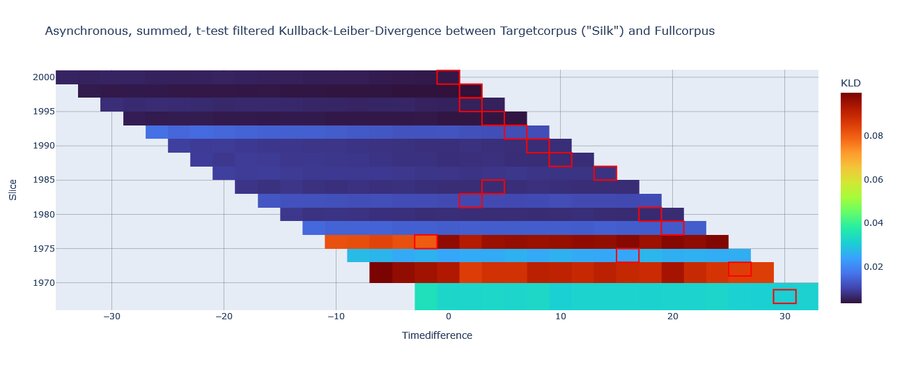
Distinguishing gradual change from the emergence of genuinely new directions is a central challenge in tracking how research fields evolve. This preprint explores local versus global evolution of knowledge systems through the socio-epistemic networks (SEN) framework, pairing an information-theoretic …
New paper: Code Review in …
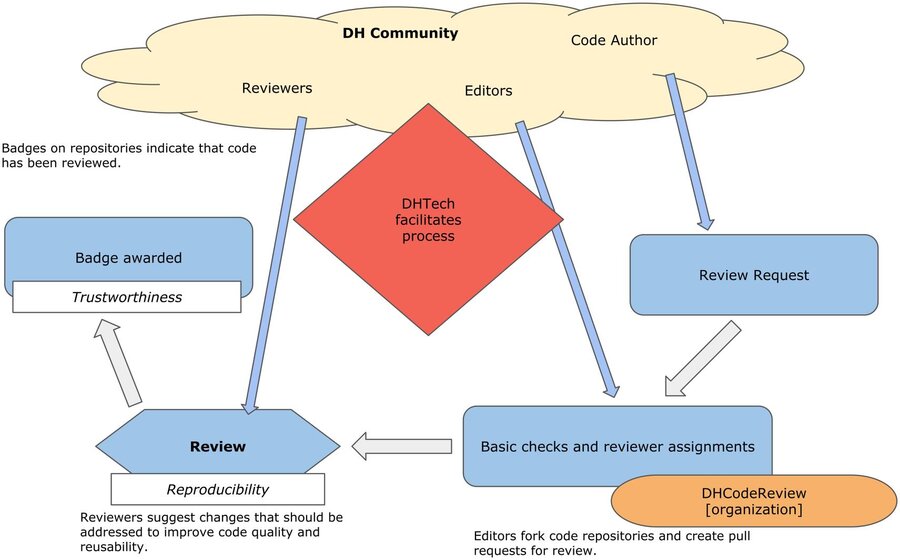
Software errors can quietly undermine digital humanities research, but code review — a standard quality-control practice in software engineering — is hard to do when most DH developers work alone or in teams of one to three. This paper shares progress and insights from an effort to establish a …