Agent-Based Modeling
Reading guide: …
Several of my publications on agent-based modeling cover the same ground from different sides. This is the order I would read them in, starting with a hands-on lesson on building a first simulation of Republic of Letters correspondence in Python.
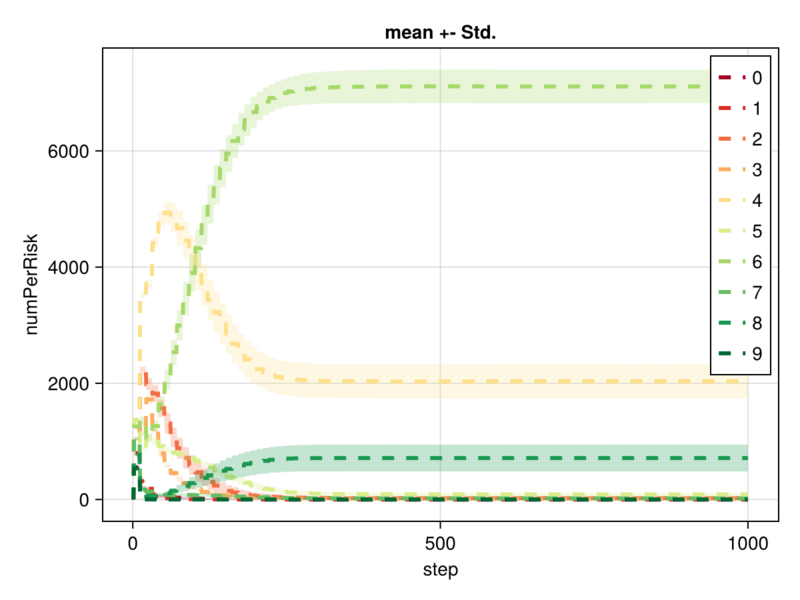
New software: HawkDove.jl
HawkDove.jl simulates a spatial Hawk-Dove game in which players differ in their attitude toward risk. Agents play against their neighbours, updating their strategy each round and, periodically, adapting their risk attitude toward that of more successful neighbours. A small-world rewiring parameter …
New chapter: Agent-Based …
Agent-based models let researchers explore possible pasts and possible futures side by side. This chapter takes stock of what such models can offer historians and policymakers working with incomplete evidence, weighing their limitations as carefully as their possibilities.
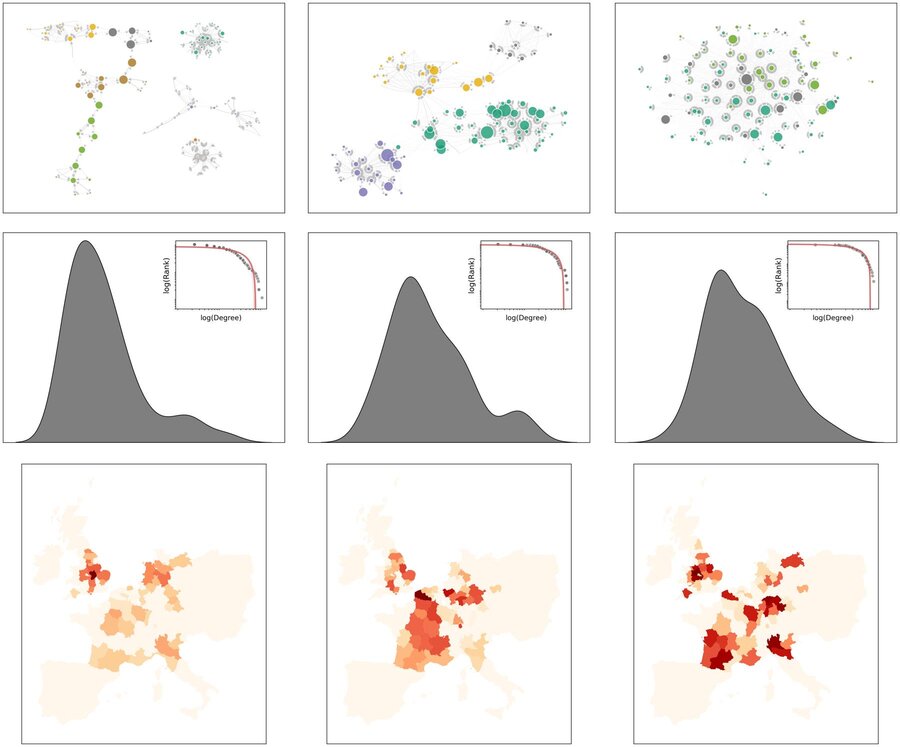
New paper: Growing and …
Digital archives are never complete, and that selection bias can quietly distort empirical studies built on them. This paper introduces an agent-based model that simulates both the sending of historical letters and their subsequent loss to archiving, allowing counterfactual correspondence networks …
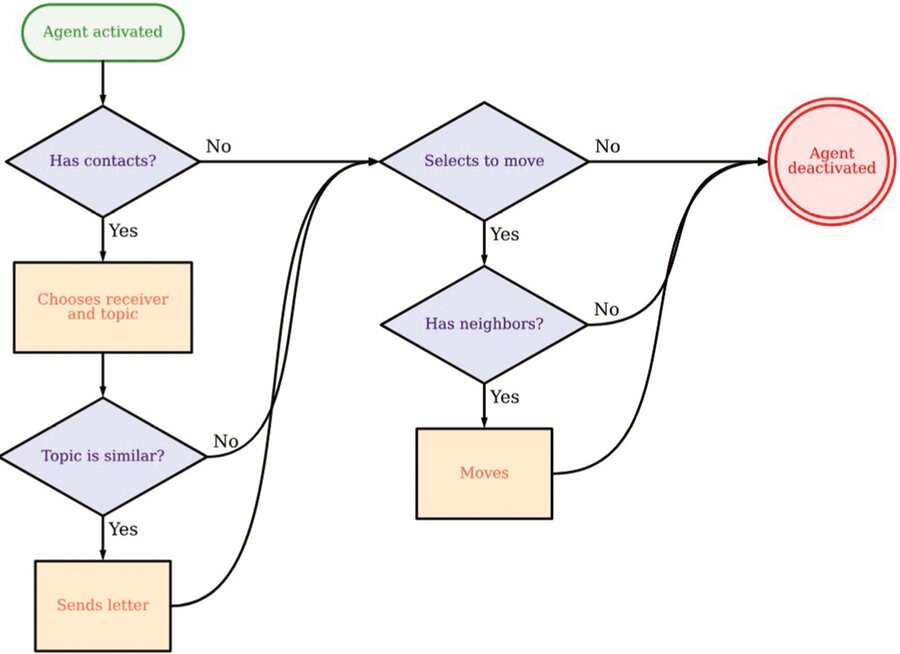
New lesson: Simulating …
This Programming Historian lesson introduces agent-based modeling as a method for historical research, using the Python package mesa. Learners build a simulation of early modern letter-exchange networks — the Republic of Letters — starting from the basic concepts (what a simulation is; agents, …
New chapter: Why Would We …
Working with archival material always raises the question of what circumstances produced a given document or collection — and what is missing from it. This chapter makes the case for agent-based modeling and simulation as ways to uncover possible biases and structurally represent historical …