History of Science
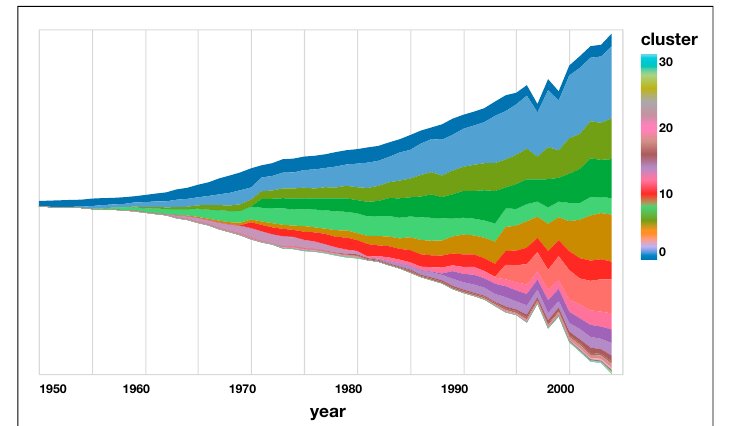
New paper: Temporalities …
Scientific fields do not change at a single, uniform pace — some parts move quickly, others remain stable for decades. This paper applies the socio-epistemic networks framework, using time-dependent clustering of co-citation networks, to analyze the development of 20th-century scientific fields and …
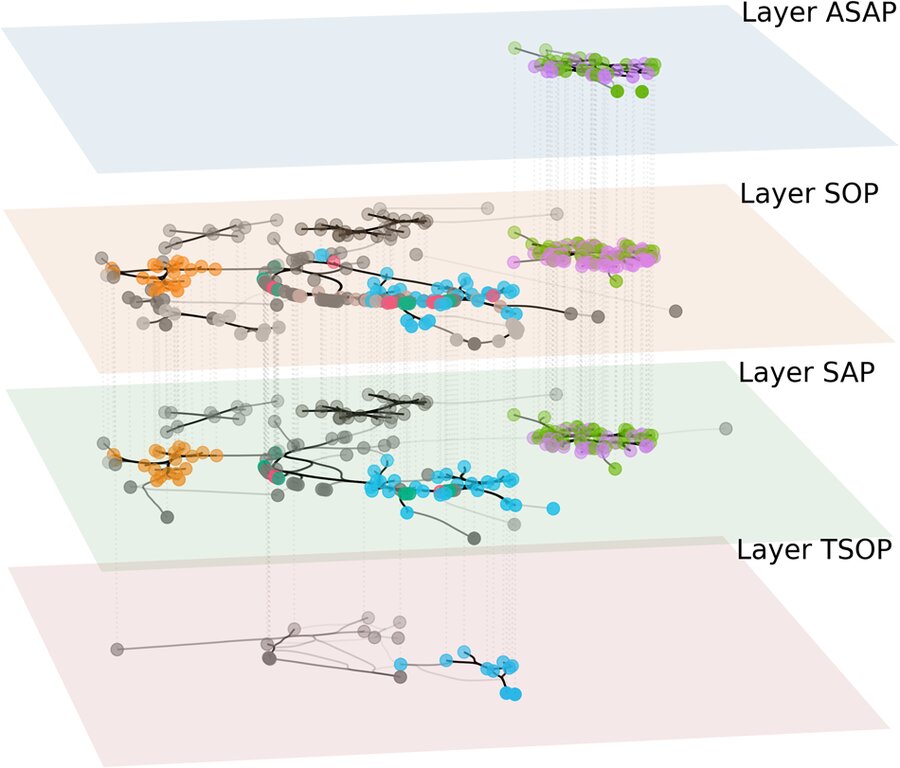
New paper: A Mathematical …
Rather than just describing how knowledge accumulated in the Sphaera corpus of early modern astronomy textbooks, this paper models it: connections between more than 350 textbook editions are arranged into a four-layer semantic network, and the resulting model aims to better understand — and …
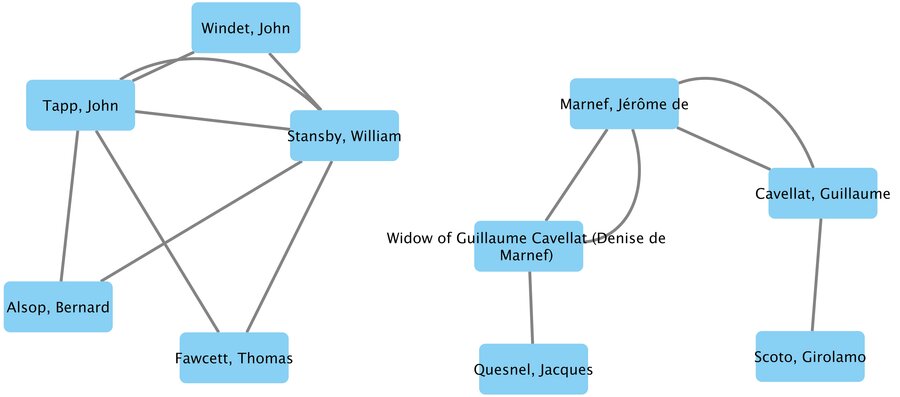
New paper: The Network of …
Printers and publishers were among the most decisive — and understudied — agents in how scientific knowledge changed in the early modern period. This paper describes a computational method for reconstructing clusters of social relationships among them, using standard bibliographic data and …
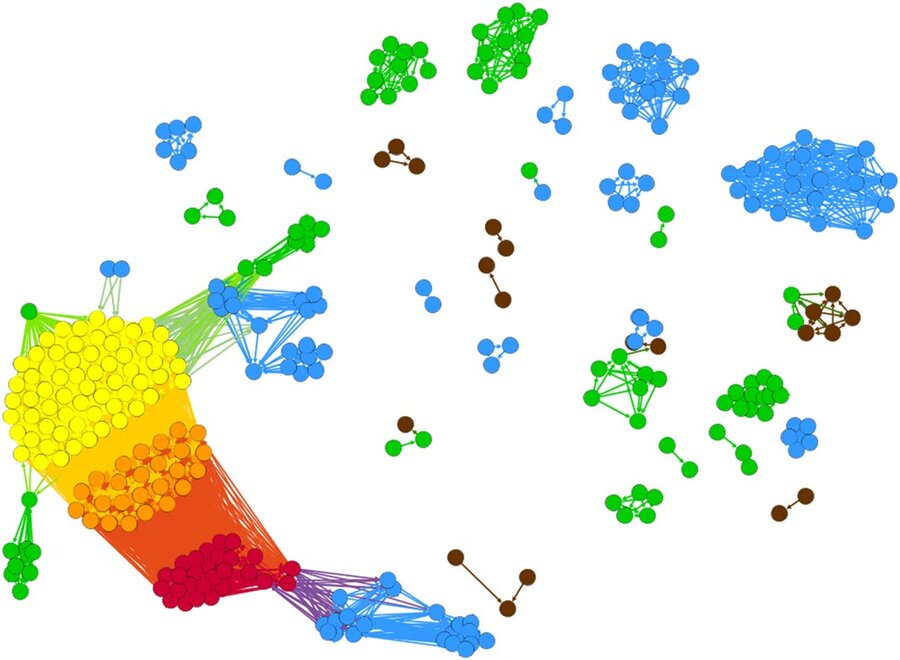
New paper: Evolution and …
Astronomy teaching changed substantially across two centuries of European universities. This paper analyzes more than 350 editions of the Sphaera Corpus — textbooks used to teach astronomy from the late fifteenth to the mid-seventeenth century — by building a six-layer multiplex network from the …
New paper: The Emergence …
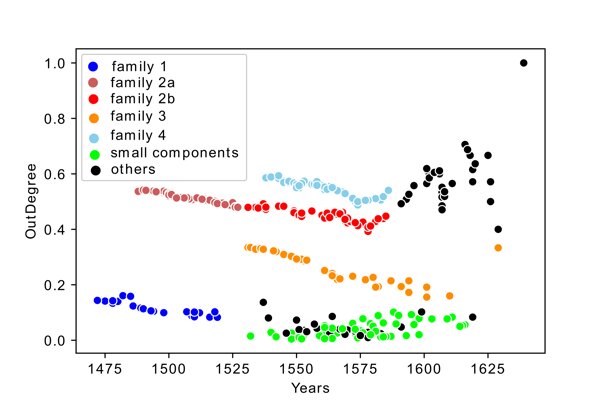
Based on semantic, content-related data from 359 printed editions of astronomy textbooks used to teach cosmology at European universities between 1472 and 1650, this paper investigates how new epistemic communities emerge. Editions are grouped into families that share content, showing how these …